
You slipped in a grocery aisle, tripped on a broken step at a friend’s house, or were hurt on a property you had every reason to be on. Whether anyone owes you anything for premises liability in South Carolina does not start with how badly you were hurt. It starts with a question that sounds technical and decides most of these cases: what was your legal status on that land?
South Carolina sorts visitors into four classes — adult trespassers, invitees, licensees, and children — and a different standard of care applies to each. Invitees are owed the most.
Status comes first, injury second
In Sims v. Giles, 343 S.C. 708, 541 S.E.2d 857 (Ct. App. 2001), the Court of Appeals set out the framework plainly:
South Carolina recognizes four general classifications of persons who come on premises: adult trespassers, invitees, licensees, and children. Different standards of care apply depending [on the classification].
That is the whole architecture. A landowner does not owe one duty to the world. The duty is calibrated to why you were there and whether the owner knew or should have known you would be.
Sims itself is a good illustration of how much turns on it: a meter reader was hurt on a customer’s property, the trial court classified her as a licensee, and the Court of Appeals held that was reversible error — she was an invitee.
Invitees: the highest duty
An invitee is the class most injured people fall into, and it is the best place to be. Sims adopts the definition from Goode v. St. Stephens United Methodist Church:
An invitee is a person who enters onto the property of another at the express or implied invitation of the property owner.
The Court also drew on the Restatement (Second) of Torts § 332, which limits invitees to those entering on an invitation carrying “an implied representation, assurance, or understanding that reasonable care has been used to prepare the premises, and make them safe for their reception.” A visitor is especially likely to be an invitee where the visit involves a matter of mutual interest or advantage to the property owner.
Practically: shoppers in a store, customers in a restaurant, tenants in the common areas, and workers there to do a job for the owner’s benefit are typically invitees. The owner owes reasonable care to keep the premises safe, which includes finding hazards, not only responding to the ones already known.
How that duty interacts with ordinary negligence principles is covered in our post on the types of negligence in South Carolina.
Two features of that duty are worth spelling out, because they are where invitee cases are won. First, it is not a passive duty to avoid creating hazards. Sims describes it as “an active or affirmative duty”, one that includes “refraining from any act which may make the invitee’s use of the premises dangerous or result in injury to him.” An owner who never inspects is not thereby safe.
Second, the owner does not escape liability by showing the accident unfolded in an unusual way. As Sims puts it, “[i]t is not necessary that the precise manner in which the injuries were sustained be foreseeable.”
It is also worth knowing that invitee status extends well beyond customers. Sims itself concerned an electric company meter reader injured when a wrought-iron gate came off its hinges on top of her; the trial court had classed her as a licensee and the Court of Appeals reversed. The court explained that utility workers, repairmen and other workers on the premises under a contractual relationship are generally invitees. If you were hurt while on a property to do a job, do not assume you were a mere licensee.
Licensees: what a landowner actually owes
A licensee is on the land with permission but for their own purposes rather than the owner’s — the social guest is the standard example. The Supreme Court defined a licensee in Neil v. Byrum as “a person who is privileged to enter upon land by virtue of the possessor’s consent.”
The duty is broader than most people assume, and broader than a simple obligation to mention known hazards. In Landry v. Hilton Head Plantation Property Owners Association, 317 S.C. 200, 452 S.E.2d 619 (Ct. App. 1994), the Court of Appeals put it this way:
A landowner owes a licensee a duty to use reasonable care to discover the licensee, to conduct activities on the land so as not to harm the licensee, and to warn the licensee of any concealed dangerous conditions or activities.
Three separate obligations sit in that sentence: discover, conduct, and warn. And the warning duty attaches to concealed dangers — a hazard in plain view is treated differently from one the visitor could not have seen.
The Court of Appeals repeated that formulation in Singleton v. Sherer, 377 S.C. 185, 659 S.E.2d 196 (Ct. App. 2008), quoting Landry directly. Both cases, like Sims, turned on whether the injured person was a licensee or an invitee — which is the argument that decides most of these disputes.
Adult trespassers: the narrowest duty
A trespasser is defined in Sims as “a person whose presence is neither invited nor suffered.” The duty owed is correspondingly slight. As the Supreme Court put it in Henson v. International Paper Co., 374 S.C. 375, 650 S.E.2d 74 (2007), “the common law generally imposes no duty on a landowner to protect a trespasser from hidden dangers,” citing Nettles v. Your Ice Co., 191 S.C. 429, 4 S.E.2d 797 (1939).
That is the starting point rather than the whole of it, and the word “generally” is doing work — which brings us to children.
Children are the exception the law takes seriously
Older South Carolina cases described two separate routes for an injured child — attractive nuisance and unguarded dangerous condition. Henson collapsed them. The Supreme Court held:
[B]y recognizing a duty to protect children from dangers to which they will not be attracted, and by disregarding the element of the child’s attraction onto a landowner’s property, any significant distinction between attractive nuisance and unguarded dangerous condition has outlived its usefulness. We think the better view is that there is but a single exception to the trespasser’s rule in premises liability suits: dangerous conditions that injure children.
The Court went further and adopted the Restatement (Second) of Torts § 339, holding that future premises liability cases brought by or on behalf of child trespassers should be decided in accordance with the principles in that section. So the question in a child case is no longer which of two doctrines fits. It is whether the landowner knew or had reason to know children were likely to trespass there; whether the condition was one the owner knew or should have known involved an unreasonable risk of death or serious bodily harm to children; whether the children, because of their youth, did not discover the condition or realise the risk; whether the burden of eliminating the danger was slight compared with the risk to children; and whether the owner failed to take reasonable care.
The principle is old and stated broadly. Quoting Franks v. Southern Cotton Oil Co., 78 S.C. 10, 58 S.E. 960 (1907), the Court in Henson set it out this way:
[O]ne who artificially creates upon his premises any dangerous thing which from its nature has a tendency to attract the childish instincts of children to play with it is bound, as a mere matter of social duty, to take such reasonable precautions as the circumstances admit of, to the end that they may be protected from injury while so playing with it, or coming in its vicinity.
Henson also widened the doctrine. The Court held that attractive nuisance does not require the dangerous thing to be the same thing that drew the child onto the property in the first place — the child need not have been lured by “the very temptation which causes injury.”
The practical consequence for a parent: if your child was hurt on land they had no permission to be on, do not treat trespass as the end of the conversation. It is the beginning of a different one.
Why defendants fight about status
Because reclassifying you is the cheapest way to win. Moving an injured person from invitee to licensee changes what the owner had to do, and often decides summary judgment before anyone reaches the facts of the fall.
Sims is the proof — the case turned entirely on the classification, and the trial court got it wrong. Expect a defendant to argue your errand was for your own benefit, that permission had lapsed, or that you strayed beyond the area you were invited into.
Appellate courts do revisit these outcomes. Our post on the South Carolina court reversing a Walmart injury verdict looks at a case where the result changed on appeal.
What helps a premises case in the Lowcountry
- —Photograph the hazard before it is cleaned up, and the surrounding area for lighting and signage.
- —Report the incident to the business and ask for a copy of the report.
- —Get names of employees and witnesses — staff turnover in Charleston’s retail and restaurant trade is fast.
- —Ask about video early. Store systems commonly overwrite within days.
- —Note why you were there. That single fact drives the classification argument.
Once liability is established, what you can recover is a separate question — our post on what damages you can claim in a South Carolina personal injury case covers it.
Frequently asked questions
Am I an invitee if I was shopping but did not buy anything?
Very likely yes. The invitation is what matters, not the purchase. A store open to the public extends an implied invitation to shoppers.
What if I was hurt at a friend’s home?
A social guest is generally a licensee rather than an invitee. That does not end the claim. Under Landry the homeowner still owes reasonable care to discover the licensee, to conduct activities so as not to harm them, and to warn of concealed dangerous conditions.
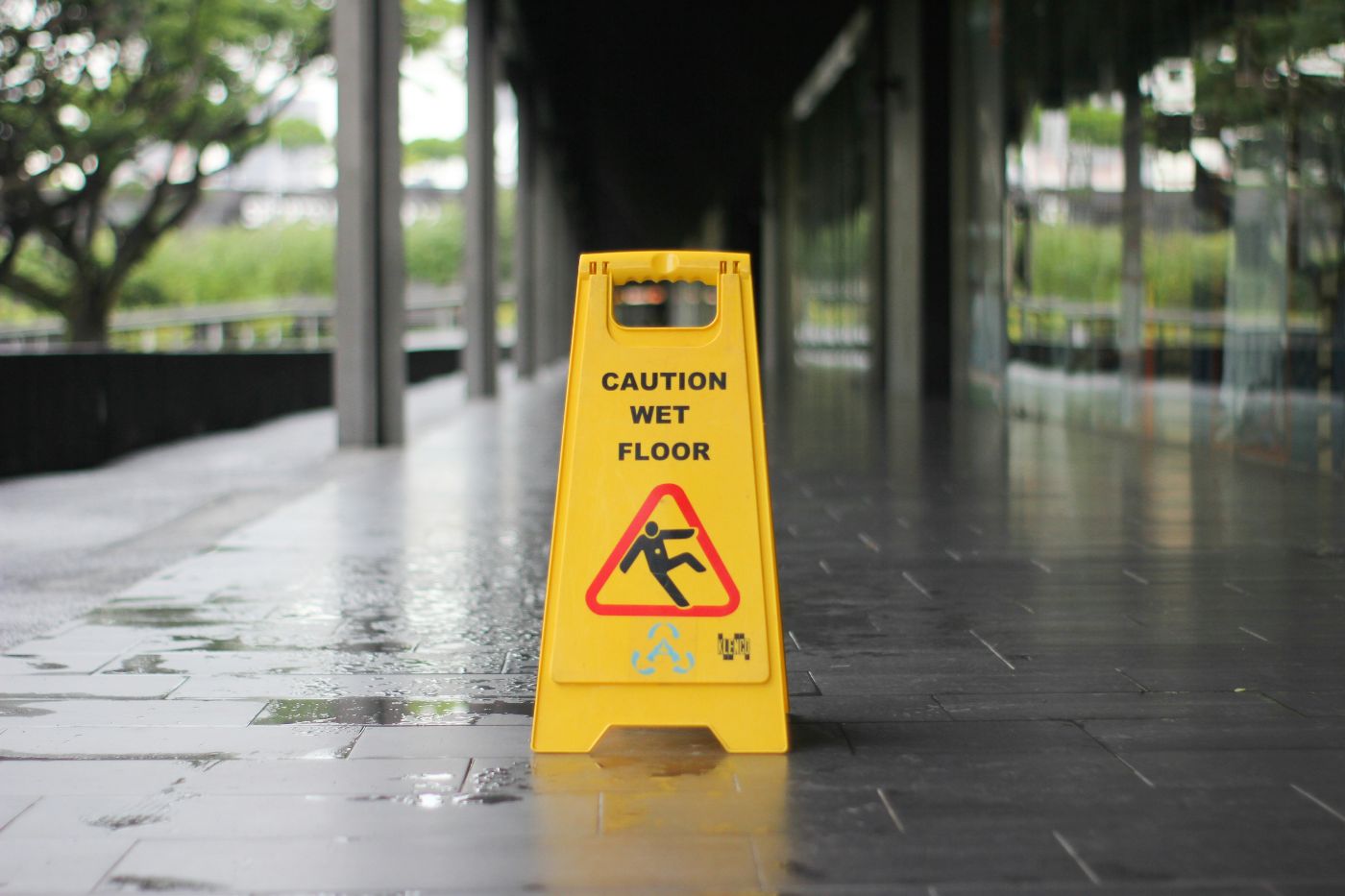
Does a “wet floor” sign defeat my claim?
Not automatically. A warning is evidence about the owner’s conduct and about what you knew, but it is weighed alongside where the sign was, whether it was visible, and how the hazard arose.
My child was hurt on property we had no permission to be on. Is that the end of it?
No. In Henson v. International Paper Co. the Supreme Court held there is a single exception to the trespasser’s rule for dangerous conditions that injure children, and adopted Restatement (Second) of Torts § 339 to govern those cases. It also held the hazard need not be the thing that drew the child onto the property in the first place. That situation is worth having reviewed.
Talk to a South Carolina premises liability attorney
These cases are won and lost on a classification argument most injured people have never heard of. Klok Law Firm handles injury claims in Charleston, Mount Pleasant, Berkeley, and Dorchester counties. Call Klok Law at (843) 701-1695 to discuss your options.
This article is for general information only and is not legal advice. For advice about your specific situation, contact Klok Law at (843) 701-1695.
Rhett D. Klok, Esq. is a personal injury attorney in Mount Pleasant, South Carolina. Klok Law Firm, LLC · (843) 701-1695 · rklok@kloklaw.com