
.jpg.2609080915596.webp)
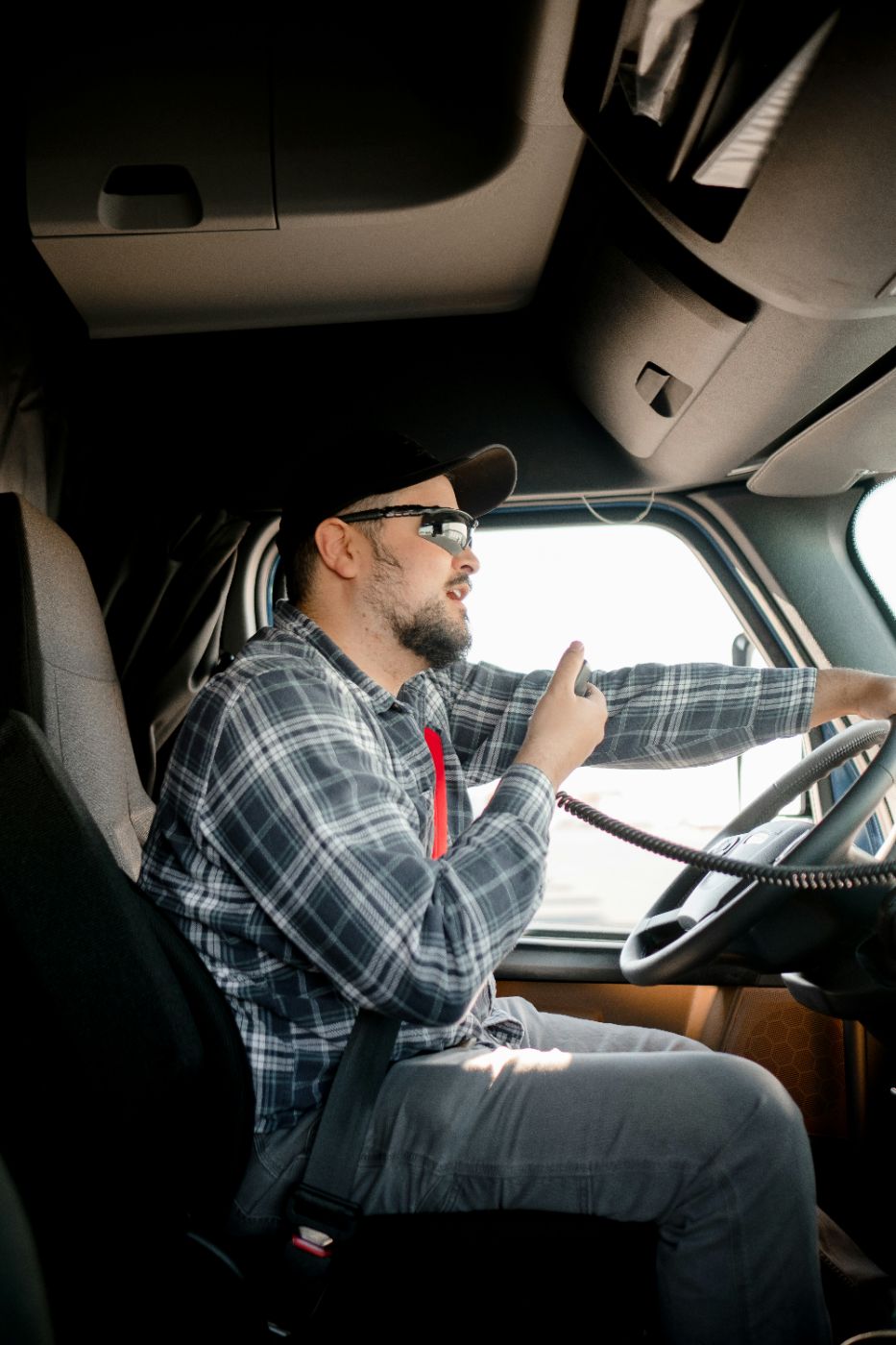
- —The ELD shows when the driver was driving, on duty and off duty, minute by minute, and whether federal hours-of-service limits were broken. South Carolina applies those federal limits to every carrier on its highways.
- —The data is only required to be kept for six months, so a written preservation demand needs to go to the carrier immediately.
- —A carrier that loses the data after being told to keep it faces an adverse-inference instruction at trial.
A collision with a tractor-trailer on I-26, I-526 or Highway 17 is rarely a simple question of who hit whom. The truck was recording itself. Since December 2017 nearly every commercial driver has been required to log hours on an electronic logging device, and electronic logbooks in trucking accidents have become the single most important piece of evidence about whether the driver should have been on the road at all. They are also evidence the carrier is allowed to discard after six months.
What an electronic logbook records
An electronic logging device, or ELD, is hardware wired to the truck's engine that records the driver's duty status automatically. Under 49 C.F.R. § 395.8(a)(1)(i), a motor carrier operating commercial motor vehicles had to install ELDs and require its drivers to use them by December 18, 2017, with narrow exceptions for short-haul and older vehicles. The device logs driving time from engine and motion data, so a driver cannot write “sleeper berth” while the truck is moving, which is what the old paper logs allowed.
The carrier's obligations are set out in 49 C.F.R. § 395.22: it must use a registered device, keep it calibrated, assign each driver a unique account, keep an information packet in the cab, and produce the records on request. Under § 395.22(i)(1) the carrier “must retain for 6 months a back-up copy of the ELD records on a device separate from that on which the original data are stored,” and § 395.8(k)(1) requires the carrier to keep records of duty status and supporting documents “for a period of not less than 6 months.” That is the floor, not a ceiling, and nothing requires a carrier to keep them longer without a request.
The hours-of-service limits electronic logbooks in trucking accidents reveal
The federal limits in 49 C.F.R. § 395.3 are specific. For a property-carrying driver:
hours off. No driving without first taking ten consecutive hours off duty.
hour window. No driving after the fourteenth consecutive hour on duty.
hours driving. No more than eleven hours of driving within that window.
minute break before driving past eight hours.
weekly limits. No driving after sixty hours on duty in seven days, or seventy hours in eight days for a carrier that runs every day of the week.
These are not only federal rules. South Carolina's Department of Public Safety has adopted the federal safety regulations, including Part 395, for carriers in interstate and intrastate commerce on the State's highways (S.C. Code Regs. § 38-424), and S.C. Code § 58-23-1120 gives the State Transport Police exclusive authority to enforce them. A driver in violation of an hours-of-service rule has broken a rule the law adopted to protect the people sharing the road, which is what a negligence per se argument is built on.
How the log becomes proof in a South Carolina case
The South Carolina Court of Appeals' 2021 decision in Dawkins v. Sell shows the log doing its work. A tractor-trailer struck an overturned moving truck on the interstate at night, injuring the moving truck's occupant. An expert testified that the truck driver's log showed him resting in his bunk at the same time other records showed him picking up a shipment, that this was a violation of the Federal Motor Carrier Safety Regulations, and that he was a fatigued driver. The jury heard that evidence, and the appeal turned on how the truck driver's negligence fit into the chain of causation.
Two lessons follow. The log is rarely read alone; it is checked against fuel receipts, toll records, bills of lading, dispatch messages and the truck's engine control module, and the contradictions are the case. And the log matters whether the truck driver is the only defendant or one of several, because fault in South Carolina is apportioned, and every percentage point shifted to a fatigued driver comes off someone else.
The log is rarely read alone. It is checked against fuel receipts, toll records, bills of lading, dispatch messages and the engine control module, and the contradictions are the case.
The six-month problem, and the letter that solves it
Because the regulations require only six months of retention, a carrier that does nothing wrong can lawfully overwrite the record of the crash before a lawsuit is filed. The answer is a written preservation demand, sent to the carrier and its insurer as early as possible, identifying the ELD data, the supporting documents, the engine control module download, dash-camera footage and the driver's qualification file.
That letter changes the legal position. South Carolina does not recognize a separate lawsuit for destroying evidence; the Supreme Court declined to adopt one in Cole Vision Corp. v. Hobbs in 2011. What the Court pointed to instead were the remedies that already exist inside the injured person's own case: courts here have struck a party's pleadings and have approved jury instructions allowing an adverse inference against a party that lost or destroyed relevant evidence. A carrier that receives the demand and discards the log anyway hands the injured person that instruction.
Our post on why you need a lawyer after a car accident in South Carolina explains the general point; in a truck case the timing is the whole point. If no officer responded or the report is thin, what happens if there is no police report explains how the case proceeds on other evidence.
What the carrier's insurer will do first
Commercial carriers and their insurers send investigators to serious crashes within hours. Expect a call requesting a recorded statement and a medical authorisation before you have seen a doctor twice. The insurer is entitled to investigate; you are not obliged to help it build a comparative fault argument. Our post on the insurance company's role in auto accidents explains why those calls come so fast.
What to do now
Get medical care and follow it through. A gap in treatment is read as a gap in injury.
Write down the carrier's name, the USDOT number on the cab door, the trailer number and the driver's name from the exchange of information or the report.
Photograph both vehicles and the scene, and keep your own vehicle unrepaired until it has been inspected.
Do not speak to the carrier's insurer on the record, and do not sign anything.
Get a preservation demand out. Every week without one is a week closer to the six-month line.
What the evidence supports is covered in what damages you can claim in a South Carolina personal injury case.
Frequently asked questions
Can I get the ELD data myself?
The carrier owns the data and produces it to an authorized safety official on request. A private claimant obtains it through a preservation demand and then discovery in a lawsuit. A quick informal request to the carrier's safety department sometimes works and never hurts, but it is no substitute for the written demand.
What if the driver was exempt from using an ELD?
Some drivers operate under short-haul exceptions or paper logs. Even then the carrier must keep duty-status records and supporting documents for six months, and the same fuel, toll and dispatch records exist. An exemption changes what the record looks like, not whether there is one.
Does an hours-of-service violation win the case?
It proves a rule was broken by a driver who owed you care. You must still show the violation caused the crash, which is where fatigue evidence, reaction time and the sequence of events come in. It is powerful evidence, not an automatic result.
How long do I have?
Three years for most personal injury claims under S.C. Code § 15-3-530(5). The evidence deadline is far shorter than the legal one.
Talk to a South Carolina truck accident attorney
Truck cases are decided by records that only the carrier holds, on a clock that starts the day of the crash. Klok Law Firm handles injury claims in Charleston, Mount Pleasant, and across Berkeley and Dorchester counties. Call Klok Law at (843) 701-1695 to discuss your options, or visit our personal injury page.
This article is for general information only and is not legal advice. For advice about your specific situation, contact Klok Law at (843) 701-1695.
Rhett D. Klok, Esq. is a personal injury and family law attorney in Mount Pleasant, South Carolina. Klok Law Firm, LLC · (843) 701-1695 · rklok@kloklaw.com