
The claim you file next month will be decided largely by what you collected in the first hour and the first week. Knowing what to document after a car accident matters because the most persuasive evidence is also the most perishable — the scene is cleared, the vehicle is repaired, and the video is overwritten long before anyone disputes what happened.
Short answer: Photograph everything before it changes, get names and numbers rather than trusting a report to have them, seek medical attention promptly, and keep a written record of how the injury affects your days.
At the scene, if you are able
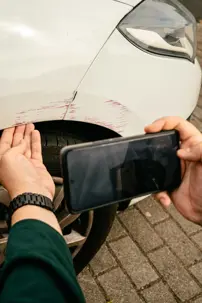
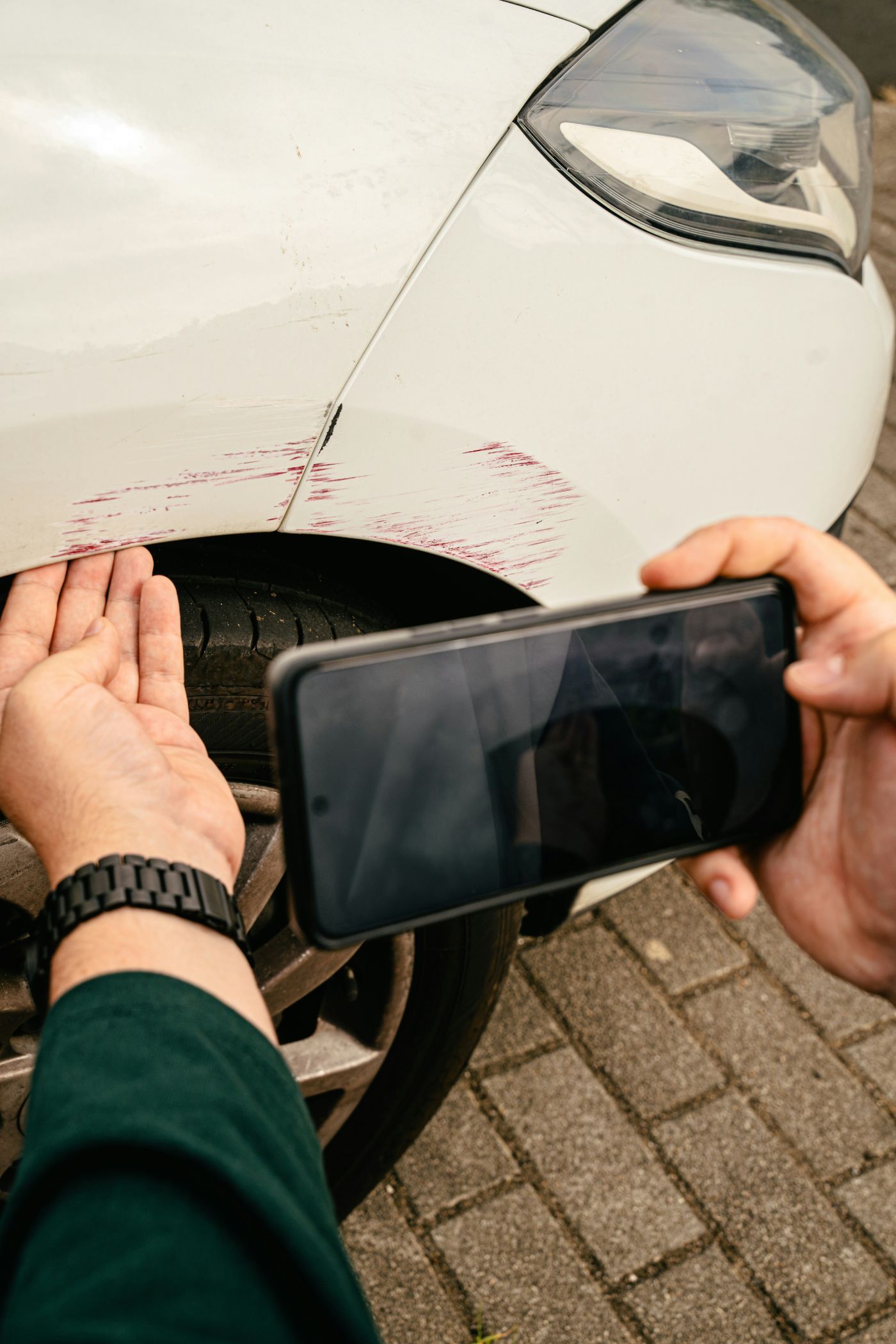
Photograph all vehicles from several angles, wide enough to show their positions relative to each other and the road.
Photograph the whole scene — skid marks, debris, traffic controls, sight lines, road surface, and the weather and light conditions.
Photograph the other driver’s licence, insurance card, and licence plate rather than copying the details by hand.
Get names and phone numbers of witnesses yourself. Officers do not always record everyone, and a witness who leaves is often unfindable.
Note the responding agency and the report number.
Photograph visible injuries the same day, and again as bruising develops.
Our post on the steps to take at an accident scene covers the safety side of those first minutes.
If you were too injured to gather any of this, that is not fatal to a claim — it is a reason to move faster now on the evidence that still exists.
Evidence that disappears fastest
Some categories have a short shelf life, and they are worth chasing in the first days rather than the first month.
**Video.** Business, doorbell and traffic cameras record on a loop and overwrite themselves. There is no law requiring a private business to keep footage for any particular length of time, and retention varies from one system to the next — which is exactly why a written request asking the business to PRESERVE the footage, made as early as possible, is worth more than a phone call asking to see it later.
**The vehicles.** Repair or salvage destroys physical evidence of impact and speed. Photograph thoroughly before authorising repairs, and say so if an insurer wants a quick total-loss disposal.
**Dashcam and phone data.** Devices overwrite on a loop and phones get replaced. Export and back up anything relevant.
**The scene itself.** Skid marks fade, debris is swept, and roadworks change layouts. A return visit within a few days for photographs is worth the trip.
If no officer attended, our post on what happens if there is no police report after a car accident explains how a claim proceeds without one.
Medical documentation is the part people get wrong
Two habits do most of the damage. The first is waiting. A gap between the crash and the first medical visit is the standard argument that the injury came from something else — and that argument is aimed at a real element of the claim. To recover in negligence a plaintiff must prove damage proximately caused by the breach; Vinson v. Hartley, 324 S.C. 389, 477 S.E.2d 715 (Ct. App. 1996), puts it plainly: “[i]f the plaintiff fails to prove any one of these elements, the action will fail.” A treatment gap is not a technicality — it is evidence aimed at the element that carries the case.
The second habit is minimising at the appointment. Saying you feel fine, or mentioning only the worst pain, produces a record that will be quoted back at you.
Describe every symptom, including the ones that seem minor, and be accurate about pre-existing conditions rather than omitting them. An inconsistency discovered later costs more credibility than the condition itself ever would have.
Keep every discharge instruction, referral, prescription, and bill.
Track mileage to appointments and any out-of-pocket spending.
Keep documentation of missed work and lost income from your employer.
Keep a short daily record
A few lines a day, written contemporaneously, is more persuasive than a recollection assembled months later. Note pain levels, sleep, tasks you could not do, appointments, and the activities you missed.
This is the evidence for the part of a claim that receipts cannot show, and it is nearly impossible to reconstruct honestly after the fact.
What that record ultimately supports is covered in our post on what damages you can claim in a South Carolina personal injury case.
What not to do
Do not post about the crash, your injuries, or your activities on social media. Those posts are routinely obtained and read in the least generous way available.
Do not give a recorded statement to the other driver’s insurer before you understand your own injuries.
Do not sign a broad medical authorisation without knowing what it opens up.
Do not throw away a damaged item — a helmet, a car seat, glasses — because it looks like rubbish. It is an exhibit.
Our post on the role insurance companies play in auto accidents explains why the early requests arrive so quickly.
Why the deadline still matters
Most South Carolina personal injury claims must be brought within three years under S.C. Code § 15-3-530(5), and two where a government body is a defendant — extended back to three if a claim was filed under the Tort Claims Act first. That sounds like ample time to gather documents, and it is not — the evidence described above is gone long before the deadline, which is why documentation is an early task rather than a later one.
Frequently asked questions
I did not take photos at the scene. Is my claim finished?
No. Police reports, witness accounts, vehicle damage, medical records, and nearby camera footage can all establish what happened. It does make moving quickly on the remaining evidence more important.
How long do businesses keep security footage?
There is no legal minimum. Retention is a business decision and differs from system to system, so no useful general figure exists. Treat it as short, and make a written preservation request early rather than assuming footage will still be there when someone asks for it.
Should I keep going to the doctor even if I feel better?
Follow your provider’s advice. Stopping treatment early creates a gap in the record that will be read as the injury having resolved, and gaps are hard to explain later.
Talk to a South Carolina car accident attorney
The evidence that decides a claim is usually the evidence someone thought to preserve in week one. Klok Law Firm handles injury claims in Charleston, Mount Pleasant, Berkeley, and Dorchester counties, and the earlier we are involved the more of it survives. Call Klok Law at (843) 701-1695 to discuss your options.
This article is for general information only and is not legal advice. For advice about your specific situation, contact Klok Law at (843) 701-1695.
Rhett D. Klok, Esq. is a personal injury attorney in Mount Pleasant, South Carolina. Klok Law Firm, LLC · (843) 701-1695 · rklok@kloklaw.com