
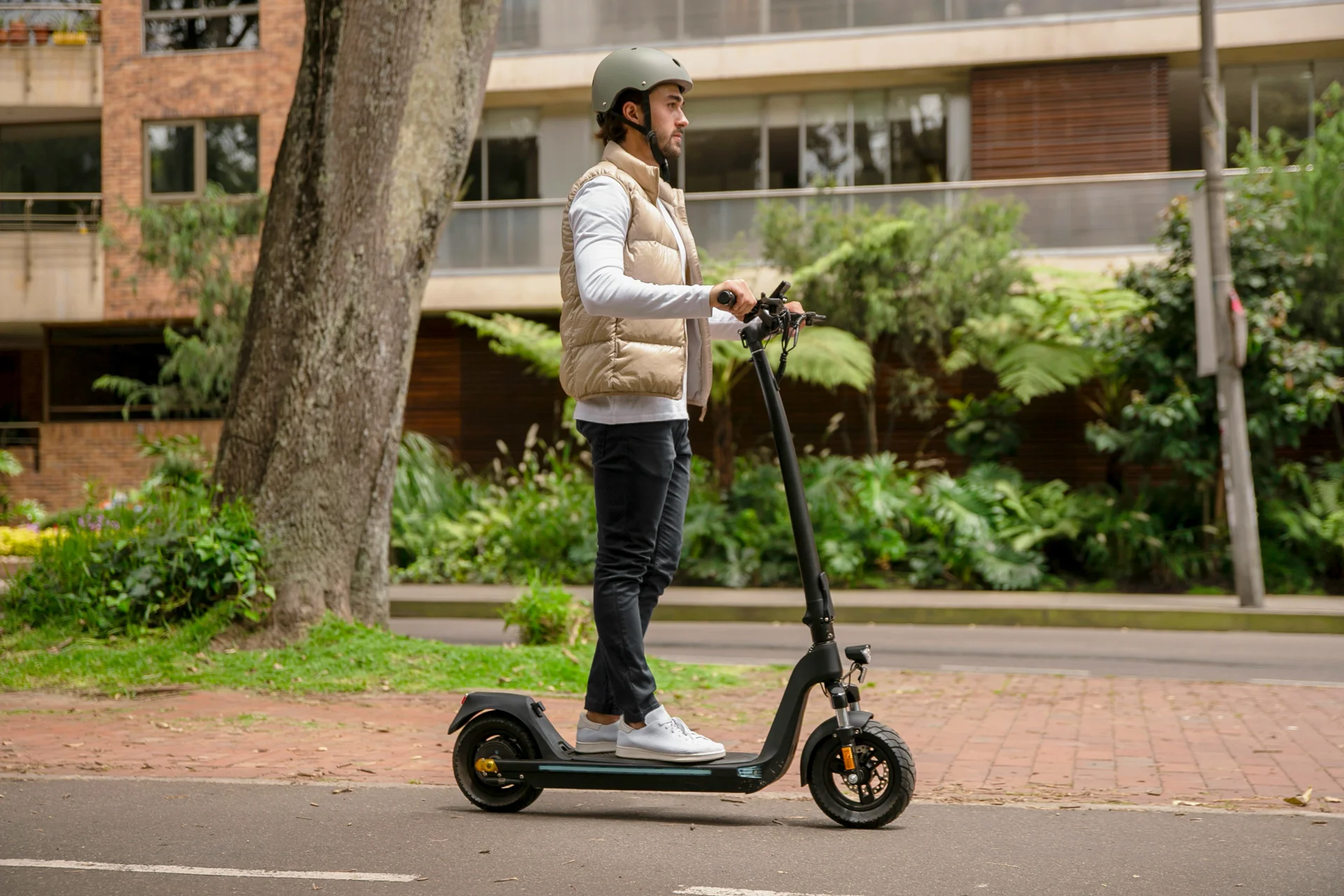
- —South Carolina has no statute written for stand-up electric scooters. Liability is decided under the same negligence rules that govern any collision.
- —A driver or rider who broke a traffic rule can be found negligent on that basis, and your own recovery is reduced by your share of the fault.
- —Get medical care, document the scene, and do not give the insurer a recorded statement before you understand your injuries.
Electric scooters are everywhere on the peninsula, in Mount Pleasant and along the beach roads, and they are colliding with cars, with pedestrians and with the pavement. If you were hurt in an electric scooter accident in South Carolina, the first thing you will discover is that the rulebook is thinner than you expected. That does not mean nobody is responsible. It means the case turns on ordinary negligence law, and on the facts you preserve now.
What the law actually says about electric scooters in South Carolina
South Carolina's traffic code has an article for “Electric Personal Assistive Mobility Devices,” or EPAMDs. Under S.C. Code § 56-5-3310(A) an EPAMD is a self-balancing, two nontandem wheeled device carrying one person, with an electric motor of 750 watts or less and a top speed under twenty miles an hour. That describes a Segway-style device. A stand-up kick scooter with a handlebar and two wheels in line does not fit the definition cleanly, and the statute says an EPAMD “is not considered a ‘vehicle’ or ‘motor vehicle’” at all.
At the other end, a scooter built to exceed EPAMD limits can fall under the definition of a “moped” in S.C. Code § 56-1-10, which covers a cycle on not more than three wheels powered by gasoline or electricity, with an electric motor rated above 750 watts and no more than 1,500 watts. Mopeds are motor vehicles, and their riders are subject to licensing, registration and the rules of the road. Many scooters sold online sit between these two definitions, which is why a Charleston police spokesman told the City Paper in October 2025 that there are no city-level rules for privately owned scooters and that regulation is left to the state. The City of Charleston did bar scooter-share businesses in 2018, so the scooter you were riding was almost certainly your own or a friend's.
Where the EPAMD article does apply, its duties are concrete: yield to pedestrians and give an audible signal before passing them, keep speed under fifteen miles an hour, obey traffic signals, use a sidewalk where one is available, and equip the device with a brake, a bell, a front lamp and reflectors at night (§ 56-5-3310(D), (E), (F), (K), (Q)). The same section places a duty on drivers: subsection (M) says every driver “shall exercise due care to avoid colliding with a person operating an EPAMD.”
Why a thin statute does not mean a weak case
South Carolina negligence law does not need a scooter-specific statute. Every road user owes everyone else reasonable care under the circumstances, and a breach that causes injury is actionable. Our post on the types of negligence in South Carolina walks through the elements.
Statutes still matter as evidence. Under the rule the South Carolina Supreme Court applied in Whitlaw v. Kroger Co., a plaintiff who shows that a statute was meant to protect against the kind of harm suffered, and that the plaintiff is in the class the statute protects, has established the duty; proof that the defendant violated the statute is proof of breach. That is negligence per se, although the plaintiff must still prove the violation caused the injury. A driver who ran a red light, passed a stopped vehicle at a crosswalk, or failed to exercise due care toward a scooter rider can be held to that standard. So can a rider who ignored a signal or rode against traffic.
Who can be liable in an electric scooter accident in South Carolina
The driver of a car or truck. Most serious scooter injuries involve a motor vehicle. Failure to yield, distraction, speed and unsafe passing are the usual claims, and South Carolina's at-fault system lets you pursue the driver's liability insurer. See whether South Carolina is a no-fault or at-fault state.
The scooter rider, when a pedestrian is struck on a sidewalk or in a crosswalk, or a passenger is carried on a device built for one.
A property owner, where a defect in a private parking lot, garage or path caused the fall and the owner knew or should have known about it.
A manufacturer or seller, where a brake, stem or battery failed. South Carolina imposes strict liability on a seller of a product in a “defective condition unreasonably dangerous” under S.C. Code § 15-73-10, subject to the defense in § 15-73-20 for a user who discovered the defect and used the product anyway.
Comparative negligence: your share of the fault counts
South Carolina follows modified comparative negligence. Under Nelson v. Concrete Supply Co., an injured person may recover as long as his or her negligence is not greater than the defendant's, and the recovery is reduced by the plaintiff's percentage of fault. Insurers know this, which is why the first questions after a scooter crash are about your speed, your lights, your helmet and whether you were on the road or the sidewalk.
Answer those questions with your lawyer, not the adjuster.
Insurance after a scooter crash
A privately owned scooter is not covered by an auto policy in the way a car is, and there is no scooter-share company standing behind it in Charleston. Three sources of coverage are worth checking. First, the at-fault driver's liability coverage. Second, your own auto policy's uninsured and underinsured motorist coverage, which can respond when you are struck by a vehicle while not in your own car, depending on the policy's terms. Third, a homeowner's or renter's policy, which may respond to a claim that a scooter rider injured someone else. Our post on full coverage car insurance in South Carolina explains the UM and UIM layers. Bring every policy in the household to the first meeting.
What to do in the first week
Get medical attention the same day, even for what seems like road rash and a sore wrist. Head, hand and lower-leg injuries are common in scooter falls and worsen over days.
Photograph the scooter, the vehicle, the location, the lighting and any surface defect before anything is repaired or cleaned up.
Get names and numbers of witnesses yourself, and ask nearby businesses to preserve camera footage, which is usually overwritten within days.
Keep the scooter. Do not sell it or have it repaired; it is evidence of speed, braking and any product defect.
Do not post about the crash, and do not give a recorded statement to the other side's insurer before you have advice.
Our guide to the steps to take at an accident scene covers the safety side of those first minutes, and what damages you can claim in a South Carolina personal injury case explains what the documentation is ultimately for.
Frequently asked questions
Do I need a license or insurance to ride an electric scooter in South Carolina?
Not for a device that falls within the EPAMD article. A scooter built to moped specifications is a motor vehicle and carries the licensing and registration rules that come with that status. If your scooter falls between the definitions, expect the insurer to argue whichever classification hurts your claim, and be ready to show the device's rated power and top speed.
I was riding on the road, not the sidewalk. Does that end my claim?
No. Where a sidewalk exists and is usable, the EPAMD article directs riders to it, so riding in the roadway can be argued as comparative fault. It reduces a recovery; it does not bar one unless your fault exceeds the driver's.
The driver's insurer says a scooter is not covered by anything. Is that right?
The driver's own liability coverage applies to injuries the driver negligently causes to anyone, scooter rider included. Whether your own UM or UIM coverage also applies depends on the policy language, which is why we read the policy rather than take the adjuster's word for it.
How long do I have to file?
Most South Carolina personal injury claims must be brought within three years under S.C. Code § 15-3-530(5), and a claim against a city, county or the State is governed by the shorter periods in the Tort Claims Act. Evidence disappears far faster than that, so the deadline is not the reason to move quickly.
Talk to a Charleston electric scooter accident attorney
Scooter cases are won on facts gathered early and on knowing which of South Carolina's overlapping definitions applies to the device involved. Klok Law Firm handles injury claims in Charleston, Mount Pleasant, and across Berkeley and Dorchester counties. Call Klok Law at (843) 701-1695 to discuss your options, or visit our personal injury page.
This article is for general information only and is not legal advice. For advice about your specific situation, contact Klok Law at (843) 701-1695.
Rhett D. Klok, Esq. is a personal injury and family law attorney in Mount Pleasant, South Carolina. Klok Law Firm, LLC · (843) 701-1695 · rklok@kloklaw.com