
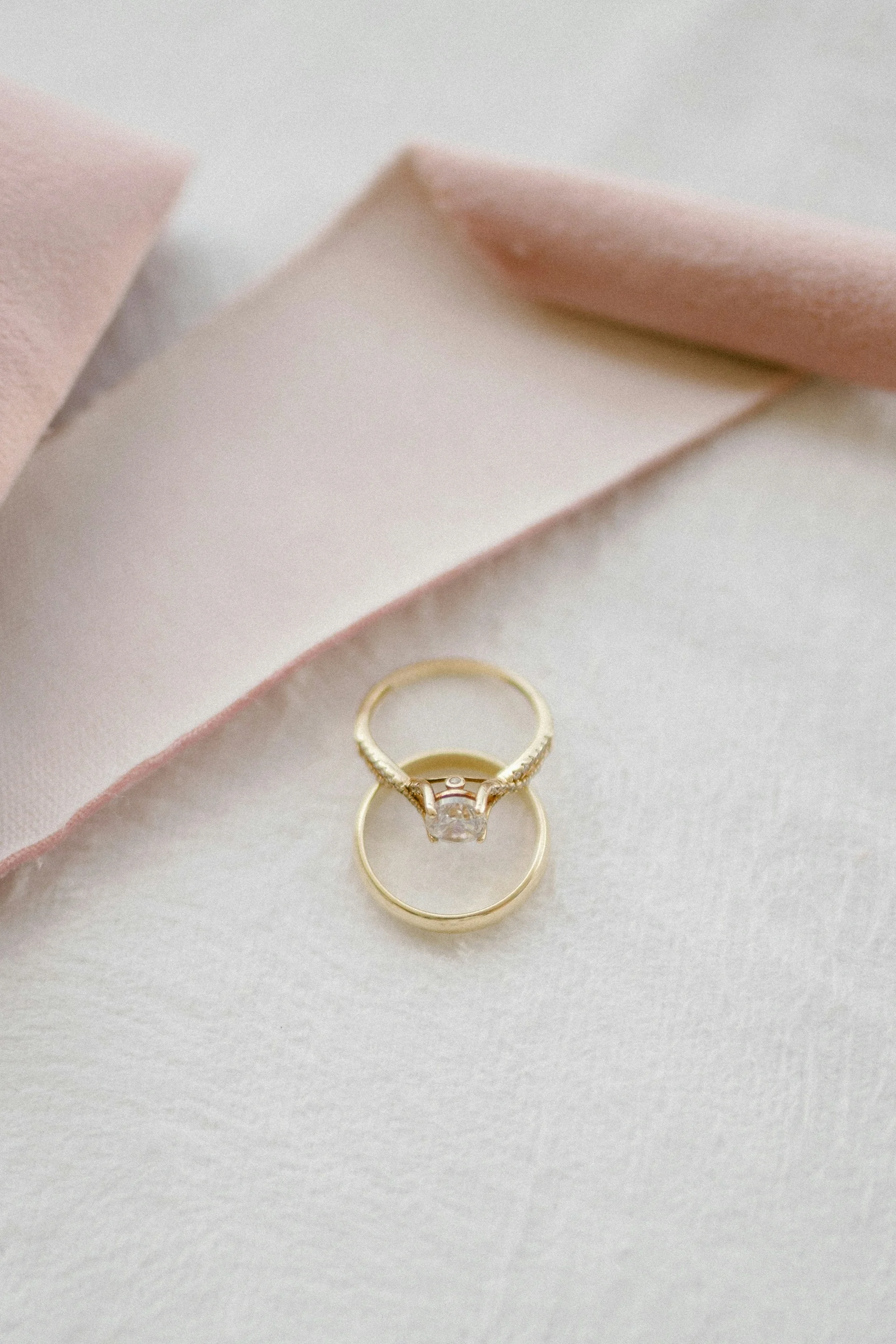
More engagements begin in December than in any other month, and a certain number of them do not survive to spring. When one ends, the question that follows is rarely about the wedding venue. It is about the ring. Who keeps the engagement ring in South Carolina does not depend on who ended it — and that answer surprises nearly everyone.
The ring is a conditional gift, so if the marriage does not happen it generally goes back to the person who gave it — and whose fault the breakup was makes no difference. What can change the answer is evidence that the ring was not given on that condition, or that it had already become the recipient’s to keep.
Fault has nothing to do with it
The Court of Appeals settled this in Campbell v. Robinson, 398 S.C. 12, 726 S.E.2d 221 (Ct. App. 2012), treating it as a question of first impression in South Carolina. The circuit court had ruled that the ring belonged to whichever person was not at fault in ending the relationship. The Court of Appeals disagreed:
We hold that the consideration of fault has no place in determining ownership of an engagement ring. Generally, gift law will dictate who has the legal right to the ring.
The Court’s reasoning was practical. Jurisdictions are split, but courts adopting a fault approach run into a problem: there is no legal standard by which a fact finder can judge culpability in a premarital breakup. Negligence has the reasonable person; a broken engagement has nothing comparable.
The Court also noted the irony a fault rule can produce — two of the main purposes of an engagement are to prepare a couple for marriage and to test whether their compatibility will last, so a fault approach can penalise the person who honestly recognises that it will not.
Why a ring goes back: it is a conditional gift
If fault is out, what decides it is ordinary gift law. Campbell explains the mechanism:
An engagement ring by its very nature is a symbol of the donor’s continuing devotion to the donee. Once an engagement is cancelled, the ring no longer holds that significance... Thus, if a party presents evidence a ring was given in contemplation of marriage, the ring is an engagement ring. As an engagement ring, the gift is impliedly conditioned upon the marriage taking place. Until the condition underlying the gift is fulfilled, the attempted gift is unenforceable and must be returned to the donor upon the donor’s request.
That is the whole architecture. A gift normally has no strings attached; this one does. The condition is the marriage, and until it occurs the gift is not complete.
Who has to prove what
The burden sits on the person keeping the ring. Campbell puts it this way: the party challenging the assertion that the ring is an engagement ring, and therefore impliedly conditioned on marriage, has the burden of presenting evidence to overcome those assertions.
That burden can be met in a few ways — by showing the ring was not given in contemplation of marriage and so was never an engagement ring at all, by showing it was not conditioned on the marriage, or, where nobody disputes it started as an engagement ring, by showing it later became the challenger’s property.
In Campbell itself the ring was given during the proposal, which made it an engagement ring. The recipient argued the donor had told her she could keep it after he broke things off. The Court of Appeals did not finally decide who kept it — having rejected the fault approach the trial court had used, it affirmed the rulings on restitution and on the breach of promise to marry claim, and reversed and remanded for a new trial on the two claims that decide the ring.
The engagement itself can be a legal question
South Carolina is unusual here. A broken engagement is not only about property — this State still recognises a cause of action for breach of promise to marry. Campbell involved exactly such a claim, and a jury found the promise had been breached, though it awarded no damages.
It is a narrow and rarely used action, and the outcome in Campbell shows why: proving a broken promise is not the same as proving a loss. Do not read its survival as an invitation.
What this means in practice
- —If you gave the ring and the wedding is off, you are generally entitled to it back, whoever ended things.
- —If you received the ring, keeping it takes evidence — that it was not conditioned on marriage, or that it was later given to you outright.
- —Get any agreement about the ring in writing at the time. In Campbell the parties were left arguing over competing accounts of what had been said, and the Court of Appeals sent the ring claims back for a new trial rather than deciding them.
- —A ring given as a birthday or holiday gift, rather than at a proposal, is a different case — the condition is what matters, not the object.
- —Rings and gifts exchanged after a marriage takes place raise separate questions of marital property.
If the marriage did take place and you are asking whether it was valid at all, see our South Carolina annulment guide.
Frequently asked questions
I broke off the engagement. Do I still get the ring back?
Yes, in the ordinary case. Campbell holds that fault has no place in deciding ownership, so ending the engagement yourself does not forfeit the ring.
What if the ring was a family heirloom?
The conditional-gift analysis is the same, and the practical stakes are higher. Where an heirloom is involved it is worth resolving early rather than letting it sit.
We lived together for years. Does that make us married?
No. South Carolina abolished common-law marriage prospectively in 2019, so cohabitation does not create a marriage. Our post on that abolition covers what it changed and what it did not.
Can I sue for the money I spent on the wedding?
South Carolina still recognises a claim for breach of promise to marry, but Campbell is a caution: the jury there found a breach and awarded nothing. Any such claim needs a hard look at provable loss before it is worth bringing.
If you changed your name in anticipation of the marriage, our guide to changing your name in South Carolina covers reversing it.
Talk to a Charleston family law attorney
Most ring disputes are worth resolving quickly and quietly, and knowing the rule usually shortens the argument. Klok Law Firm handles South Carolina family law in Charleston, Mount Pleasant, Berkeley, and Dorchester counties. Call Klok Law at (843) 701-1695 to discuss your options.
This article is for general information only and is not legal advice. For advice about your specific situation, contact Klok Law at (843) 701-1695.
Suzanne Lafleur Klok, Esq. is a family law attorney in Mount Pleasant, South Carolina. Klok Law Firm, LLC · (843) 701-1695 · sklok@kloklaw.com