
The emergency room at Roper or MUSC said the CT scan was clear and sent your husband home with a concussion sheet. Six weeks later he cannot follow a conversation, sleeps twelve hours and is angry in a way he never was. A traumatic brain injury claim in South Carolina is often exactly this case: an injury that does not show on the first scan, that the insurer calls a concussion, and that has changed a family’s life. This article explains what these claims involve and how they are proved.
A brain injury caused by someone else’s negligence is compensated in South Carolina like any other injury, but it is proved differently. The evidence is the person before and after, documented by the people who knew them and the specialists who test them, and the value of the claim follows the permanence of the change. Because the stakes are high, these claims are handled from the start as serious injury cases, not as concussion files.
What a traumatic brain injury is
The Centers for Disease Control and Prevention describes a traumatic brain injury as an injury that affects how the brain works, caused by “a bump, blow, or jolt to the head” or by “a hit to the body that causes the head and brain to move quickly back and forth,” and notes that the resulting symptoms may affect how a person thinks, learns, feels, acts and sleeps. It also notes that a person with multiple or repeated mild injuries may have a longer recovery, more severe symptoms and long-term problems. The point for a claim is that a “mild” TBI is a medical classification of the initial injury, not a description of its effect on a life, and that the head does not have to strike anything for the injury to occur.
Car and truck crashes, motorcycle crashes, falls from height and falls on stairs are the common sources in our practice. Our post on the most common injuries in a South Carolina motorcycle crash and our guide to paraplegia and quadriplegia cover the other catastrophic injuries that often accompany a TBI in the same event.
Why the normal scan does not end the claim
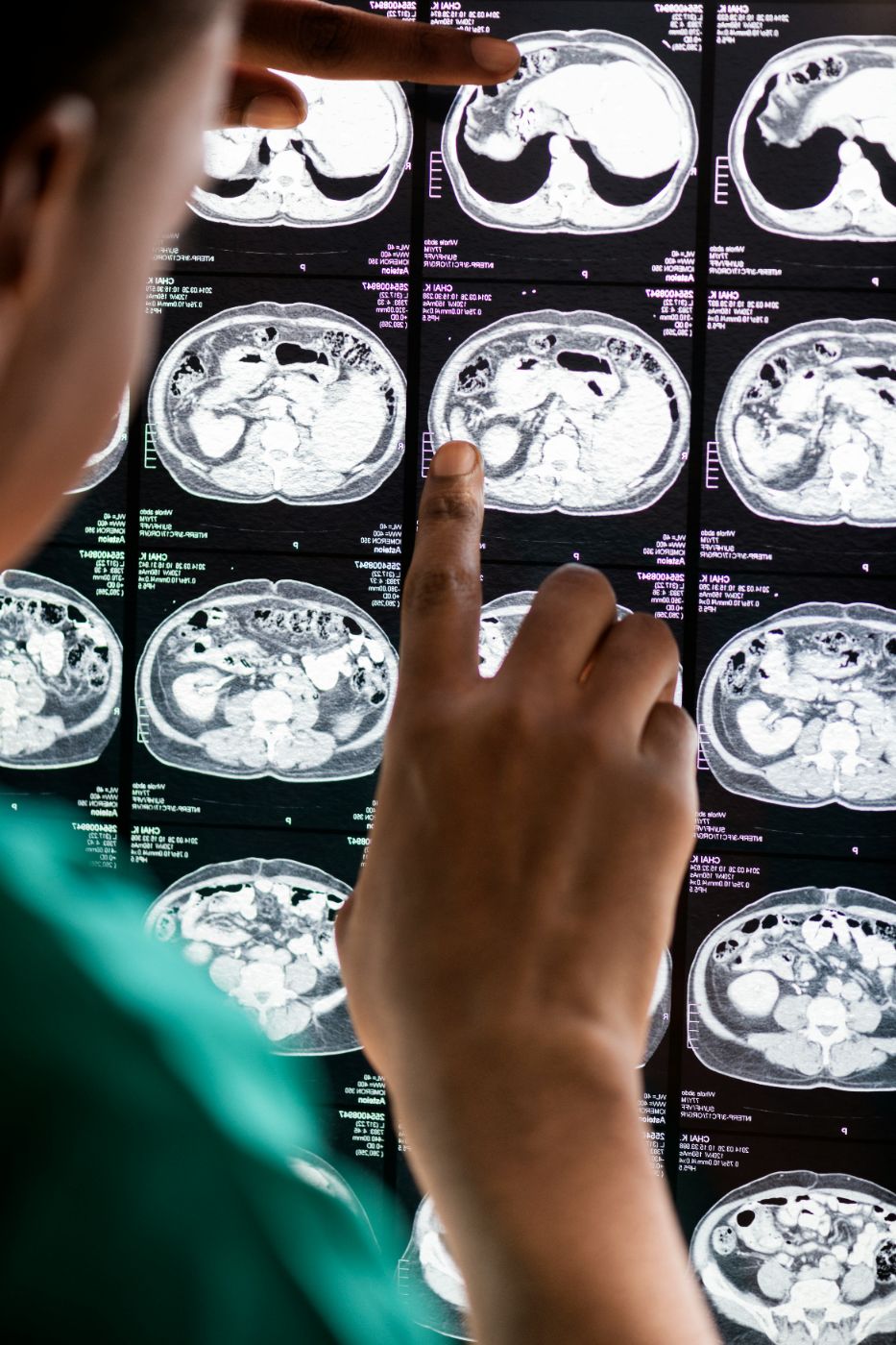
A CT scan in the emergency room is designed to find bleeding and fractures that need surgery. It is not designed to find the diffuse injury to brain tissue that produces the cognitive, emotional and behavioral changes families notice later. A normal CT is consistent with a significant brain injury, and insurers know this even as their letters cite it. What documents the injury is the follow-up: a referral to a neurologist, neuropsychological testing that measures memory, attention and processing speed against expected baselines, and, where indicated, more sensitive imaging. Getting that referral requires telling the treating provider what has changed, in detail, and that is where families matter.
How a traumatic brain injury claim in South Carolina is proved
Before-and-after witnesses. A spouse, an adult child, a supervisor, a coach, a pastor: people who can describe the person’s memory, temper, energy, work and habits before the injury and what they are now. Their testimony is the heart of the claim, and their notes, kept from the first weeks, are its most credible form.
The medical record, built deliberately. Every symptom reported at every visit, so that the record itself tells the story without needing an expert to fill gaps. Missed appointments and unreported symptoms are what defense reviewers look for.
Neuropsychological testing. Objective measurement is what moves a claim from “he says he forgets things” to documented deficits. It also answers the defense argument that the changes are stress, depression or age rather than injury.
Work and school records. Performance reviews, attendance, grades and duties before and after the injury show the functional loss in the defendant’s own kind of evidence: documents.
A life-care plan and an economist, in permanent cases. Future care, lost earning capacity and the cost of supervision or therapy over a lifetime are calculated, not guessed, and they are usually the largest part of the claim.
What the claim pays for
Every category discussed in our guide to the damages you can claim in a South Carolina personal injury case applies: past and future medical care, lost wages and lost earning capacity, and the noneconomic losses. In a brain injury case the noneconomic element is often the largest, and South Carolina treats loss of enjoyment of life as an element separate from pain and suffering. The Supreme Court in Boan v. Blackwell, 343 S.C. 498, 502, 541 S.E.2d 242 (2001), described those damages as compensating for the limitations “on the injured person’s ability to participate in and derive pleasure from the normal activities of daily life, or for the individual’s inability to pursue his talents, recreational interests, hobbies, or avocations.” For a person who can no longer read a book, coach a team or hold a job, that is the loss.
Where the injury has changed the marriage, the uninjured spouse has a separate claim of their own under South Carolina law for the loss of the injured spouse’s companionship, aid, society and services. It is pleaded and valued separately, and in a serious brain injury case it should be evaluated at the first meeting. Our post on what loss of consortium is in South Carolina explains that claim.
Who pays, and the limits that apply
Where more than one defendant caused the injury, S.C. Code § 15-38-15 makes a defendant found fifty percent or more at fault jointly and severally liable for the whole verdict, which matters in a catastrophic case where one defendant’s coverage cannot pay it. For claims arising after January 1, 2026, an amended version of that statute also allows fault to be allocated to some persons who are not parties, and the fifty percent comparison then counts their share too. Every potentially responsible party should be identified early.
If the responsible party is a government entity, including a school district, a city or county vehicle or a public hospital, the South Carolina Tort Claims Act applies. S.C. Code § 15-78-120 limits recovery to $300,000 per person for a single occurrence and $600,000 in total for the occurrence, and bars punitive damages and prejudgment interest. The claim must also be brought within the two-year period in S.C. Code § 15-78-110, extended to three years only where a verified claim was filed with the entity first. For a permanent brain injury those limits are a hard ceiling, and identifying every non-governmental defendant becomes the way around it.
How insurers handle brain injury claims
The pattern is consistent: the normal scan is cited as proof of no injury; the diagnosis is described as a concussion that resolves in weeks; the later symptoms are attributed to stress, a prior condition or the person’s age; and an early settlement is offered before neuropsychological testing has been done. Our post on how insurance companies handle auto accident claims explains the approach. The response is to slow down, get the testing, and not resolve a claim whose permanence is not yet known.
Frequently asked questions
The ER said it was a mild concussion. Is that a traumatic brain injury?
A concussion is a mild traumatic brain injury. “Mild” describes the initial clinical picture, not the outcome, and some mild injuries produce lasting symptoms.
He never lost consciousness. Does that matter?
Loss of consciousness is one indicator, not a requirement. The CDC’s description of the injury does not require it, and many documented brain injuries involve none.
How much is a brain injury claim worth in South Carolina?
There is no schedule. Value follows the permanence of the deficits, the cost of future care and the loss of earning capacity, all of which are proved through experts. Government defendants are subject to the caps described above.
Can the family bring a claim too?
A spouse has a separate claim for loss of consortium. Other family members generally do not have their own claim while the injured person is living, but they are essential witnesses.
How long do we have?
Generally three years from the injury under S.C. Code § 15-3-530, and two years for a government defendant. A brain injury case should be started long before either deadline, because the testing and expert work take time.
Talk to a Charleston brain injury attorney
A brain injury claim handled as a concussion file is undervalued from the first letter. Klok Law handles serious injury cases across Charleston, Mount Pleasant, Berkeley and Dorchester counties; our post on why you need a lawyer after a car accident explains what that first evaluation covers. Call Klok Law at (843) 701-1695 to discuss your options.
This article is for general information only and is not legal advice. For advice about your specific situation, contact Klok Law at (843) 701-1695.
Rhett D. Klok, Esq. is a personal injury and family law attorney in Mount Pleasant, South Carolina. Klok Law Firm, LLC · (843) 701-1695 · rklok@kloklaw.com