
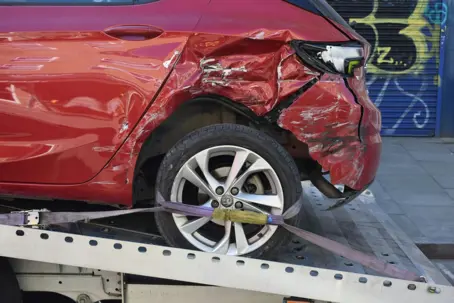
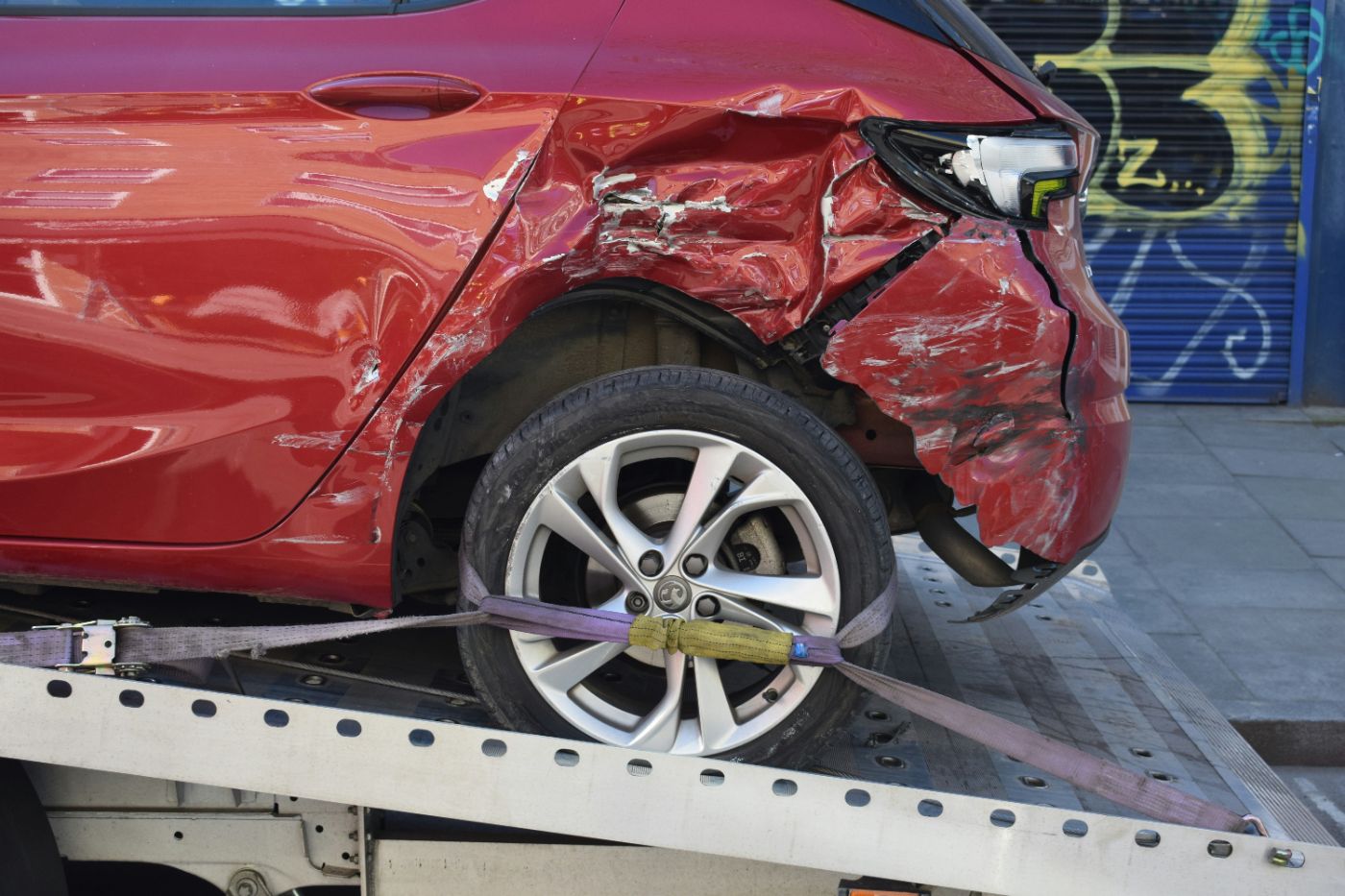
- —South Carolina does not have a rule that the rear driver is automatically at fault. What it has is a statute that requires every driver to keep a reasonable and prudent distance from the car ahead, and a rule that a driver who breaks that statute and causes a crash is negligent as a matter of law.
- —In most rear-end crashes that puts the fault where common sense puts it. The exceptions are real, though, and they are where insurers look.
You were stopped at the light on Coleman Boulevard, or slowing for the backup on I-526, and the car behind you did not stop. Now the other driver’s insurer is calling, and somewhere in the conversation the word “shared” comes up. You want to know whether a rear-end collision in South Carolina is really the rear driver’s fault, and whether anything the adjuster says can change that.
The statute that decides most rear-end collisions in South Carolina
S.C. Code § 56-5-1930 is titled “Following too closely.” Its first subsection says that the operator of a motor vehicle “shall not follow another vehicle more closely than is reasonable and prudent, having due regard for the speed of such vehicles and the traffic upon and the condition of the highway.” There is no fixed distance in feet or car lengths. What counts as reasonable on a dry afternoon on Highway 17 is not what counts in rain on the Ravenel Bridge, and the statute is written that way on purpose.
A second statute reinforces it. S.C. Code § 56-5-1520 requires a driver to keep speed “so controlled to avoid colliding with a person, vehicle, or other conveyance on or entering the highway.” Between the two, the driver behind carries the duty to leave enough room and enough time to stop. A driver who could not stop was, almost by definition, either too close or too fast for the conditions.
Why breaking that statute matters in court
South Carolina treats the violation of a safety statute as negligence per se, meaning the jury does not have to decide separately whether the driver behaved carelessly; the violation settles that question, and the case moves to whether the violation caused the harm. The South Carolina Supreme Court applied exactly that rule to a rear-end crash in Wise v. Broadway. A pickup truck following three to four car lengths behind on a wet road could not stop when the car ahead paused to turn. The Court held that the causative violation of a statute “constitutes negligence per se,” and went further: the violation is also some evidence of recklessness, so the question of punitive damages had to go to the jury.
That last point is worth pausing on. A rear-end crash is not always a case of simple carelessness. Where the driver behind was tailgating, texting or driving too fast for the weather, South Carolina law lets a jury consider whether the conduct crossed into recklessness, which opens the door to punitive damages on top of compensation for the injury. Our explainer on the types of negligence South Carolina recognizes walks through the difference.
When the front driver shares the fault
Because South Carolina is an at-fault state that compares the negligence of everyone involved, the driver in front is not immune. S.C. Code § 56-5-2150 says that no person “shall stop or suddenly decrease the speed of a vehicle without first giving an appropriate signal” to the driver immediately behind, when there is an opportunity to give it. A front driver who brake-checks, who stops in a travel lane for no reason, whose brake lights do not work, or who reverses into the car behind can be found partly or wholly at fault. So can a driver who pulls out in front of traffic and is struck before the car behind has any chance to react.
How that sharing works is set by Nelson v. Concrete Supply Co. and S.C. Code § 15-38-15. The jury assigns each driver a percentage of the fault. An injured driver whose share is not greater than the other side’s still recovers, reduced by that share; an injured driver found more than fifty percent at fault recovers nothing. An adjuster who says fault is “shared” is often reaching for that reduction with no evidence to support it.
The percentage is the jury’s to decide, on the facts, not the insurer’s to announce.
One change applies to crashes from this year on. For causes of action arising after January 1, 2026, an amended § 15-38-15 also lets a defendant ask the jury to assign a share of fault to a person who is not a party to the case, subject to disclosure rules and limits written into the statute. In a chain-reaction crash on the Mark Clark, that can mean the driver who hit you argues that a driver three cars back, who was never sued, bears part of the blame. It is a reason to identify every vehicle involved early, and to have counsel who has read the new rule.
Chain-reaction and multi-car rear-end crashes
Three-car pileups are the hardest rear-end cases, because the middle driver may have been pushed into the car ahead rather than driving into it. The physical evidence decides these: the damage pattern on each bumper, the order in which the impacts were felt, the event-data recorder in each vehicle and, increasingly, dash-camera footage. If you were the middle car and had already stopped when you were struck, say so clearly and consistently from the first report, and photograph both ends of your car before it is moved.
What to do after a rear-end collision in South Carolina
Call the police and stay until the report is written, even for what looks like a bumper tap. The steps to take at an accident scene matter more in rear-end cases than most, because the physical evidence is on the road for only a few minutes. If the police did not come, our guide to what happens when there is no police report explains what to do instead.
Photograph both vehicles where they came to rest, then the skid marks, the traffic light or sign, and the weather. Distance and lighting are what the statute turns on.
See a doctor within a day or two. Neck and back injuries from rear impacts are often not felt until the next morning, and a gap between the crash and the first medical visit is the first thing an adjuster will point to.
Do not accept a share of fault on the phone. You do not have to give a recorded statement to the other driver’s insurer, and you should not do so before you have spoken with a lawyer.
Keep track of every expense and every missed day of work. The damages you can claim in a South Carolina personal injury case go well beyond the repair bill.
Frequently asked questions
Is the rear driver always at fault in South Carolina?
No. There is no automatic rule. The rear driver is usually at fault because § 56-5-1930 puts the duty to keep a safe distance on the driver behind, but a front driver who stopped suddenly without reason or signal, whose lights were out, or who cut in without room can be assigned some or all of the fault.
The other driver says I stopped short. What now?
That is a claim of shared fault, and it has to be proved. Traffic conditions, the light, witness accounts and any camera footage will show whether your stop was reasonable. Stopping for a red light, a pedestrian or slowing traffic is not “stopping short” under the statute.
Can I recover if I was partly at fault?
Yes, so long as your share of the fault is not greater than the other side’s. Your recovery is reduced by your percentage. At more than fifty percent, you recover nothing.
Do I have a case if I was hit at low speed?
Speed at impact is not the measure of injury. Whiplash-type injuries occur at parking-lot speeds, and the question is what a doctor finds, not what the bumper looks like.
How long do I have to file?
Most South Carolina injury claims must be filed within three years of the crash. Claims against a government driver or agency run on a shorter clock and a different procedure, so do not wait to find out which applies.
Talk to a Charleston rear-end collision attorney
Rear-end cases look simple and are settled cheaply for exactly that reason. The statute favors you, but only if the evidence that shows following distance, speed and conditions is preserved before it disappears. Klok Law handles car accident claims across Charleston, Mount Pleasant, Berkeley and Dorchester counties. Call Klok Law at (843) 701-1695 to discuss your options.
This article is for general information only and is not legal advice. For advice about your specific situation, contact Klok Law at (843) 701-1695.
Rhett D. Klok, Esq. is a personal injury and family law attorney in Mount Pleasant, South Carolina. Klok Law Firm, LLC · (843) 701-1695 · rklok@kloklaw.com