

- —An injured passenger in South Carolina can claim against any driver whose negligence caused the crash, including the driver of the car you were riding in.
- —You can draw on that driver's liability coverage, the other driver's coverage, and the uninsured or underinsured motorist coverage on the vehicle you were in and, often, on policies in your own household.
- —Making a claim against a friend's insurance is not suing your friend; it is what the policy is for.
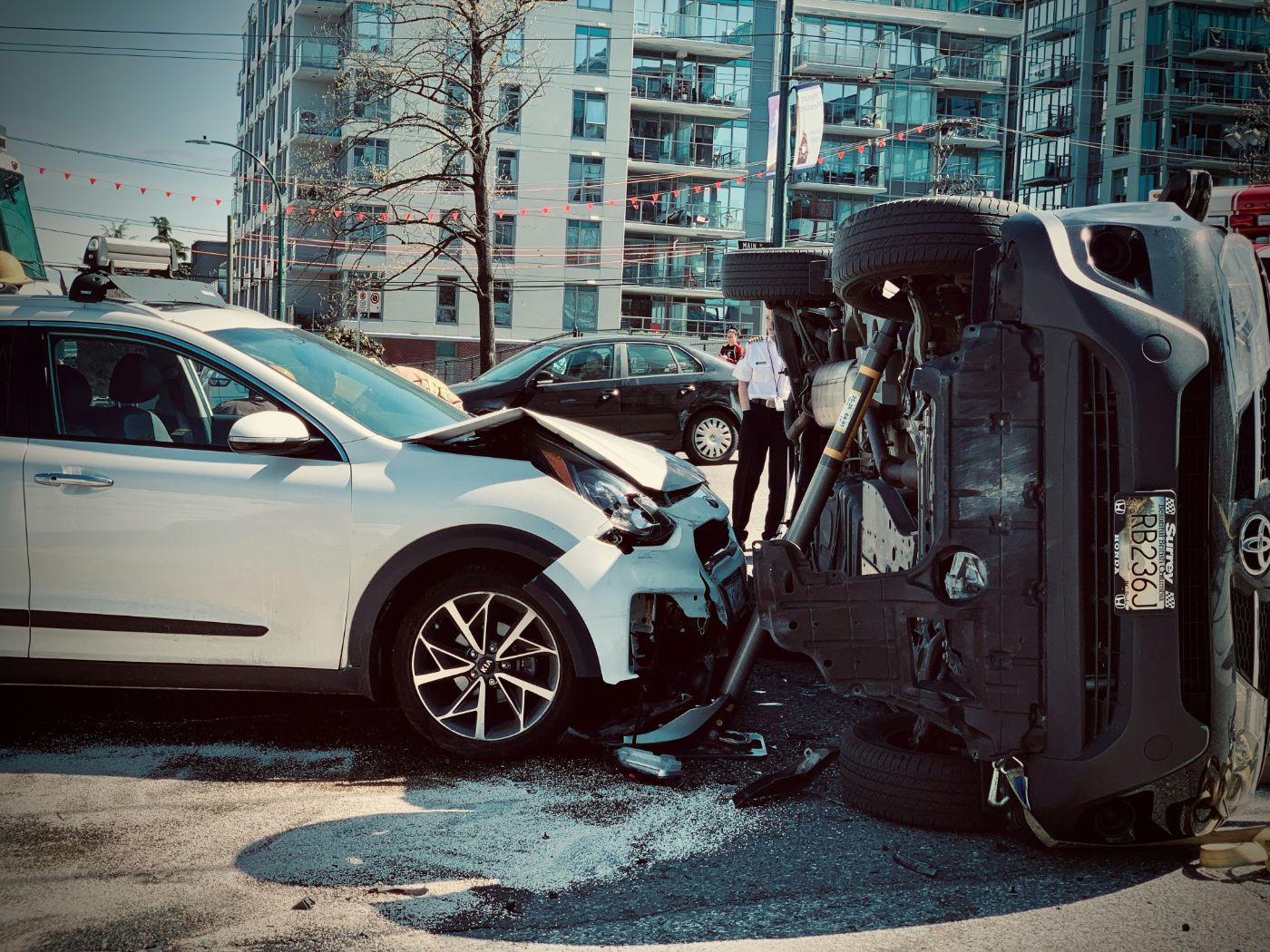
You were in the passenger seat of a friend's car on Folly Road, or in the back of a rideshare on I-26, when the crash happened. You did nothing wrong, you are hurt, and now two insurance companies are pointing at each other while a third is asking whether you really want to make a claim against the person who was driving you. Understanding your passenger rights after a car accident in South Carolina starts with one fact: a passenger is almost never at fault, and the law is built to compensate the person who is not.
You can claim against the driver of the car you were in
For decades South Carolina had a “guest statute” that barred a non-paying passenger from recovering against the driver for ordinary negligence. The South Carolina Supreme Court struck it down in Ramey v. Ramey in 1979, holding that the statute violated the equal protection clauses of the state and federal constitutions because it “irrationally distinguishes non-paying guests from paying passengers.” Since then a passenger stands in the same position as anyone else the driver owed a duty of care: if the driver was negligent and that negligence caused your injury, you have a claim.
That claim is paid by the driver's liability insurance, not out of the driver's pocket in the ordinary case. South Carolina is an at-fault state, and every policy issued here must carry liability coverage of at least the limits set by S.C. Code § 38-77-140. Friends and relatives often hesitate here, and drivers sometimes ask their passengers not to claim.
The premium was paid for exactly this situation, and a passenger who declines to claim is giving up medical bills, lost wages and more that the law says are theirs.
When another driver caused the crash, or both did
If the other driver was at fault, your claim runs against that driver's liability coverage. If both drivers share the fault, South Carolina's apportionment statute, S.C. Code § 15-38-15, has the jury assign each driver a percentage. A driver found fifty percent or more at fault is jointly and severally liable, meaning you can collect the whole judgment from that driver's coverage and leave the insurers to sort out contribution between themselves; a driver found less than fifty percent at fault pays only that share. For crashes on or after January 1, 2026, an amended version of the statute also lets a defendant ask the jury to assign fault to a person who was never sued, so identifying every vehicle involved matters from the first day.
Your own percentage in that calculation is usually zero. A passenger does not steer, brake or choose the speed. The exceptions insurers reach for are a passenger who grabbed the wheel, distracted the driver, or got into the car knowing the driver was impaired; those arguments are judged under the same comparative-fault rules as any other, and they have to be proved, not assumed. Our explainer on why South Carolina is an at-fault state covers how the comparison works.
Where the money comes from: the layers of coverage
The at-fault driver's liability coverage. The minimum is set by § 38-77-140, and it is a per-person and per-accident limit. When several passengers are hurt in the same crash, they share the per-accident limit, which is one reason a serious multi-passenger crash needs the next layers.
Uninsured motorist coverage on the car you were in. Under S.C. Code § 38-77-150 every South Carolina policy must include uninsured motorist coverage, and under S.C. Code § 38-77-30 the policy's “insured” includes “a guest in the motor vehicle to which the policy applies.” If the driver who hit you had no insurance or fled, the policy on the car you were riding in is your first source.
Underinsured motorist coverage. S.C. Code § 38-77-160 requires insurers to offer underinsured coverage, which pays when the at-fault driver's limits are not enough for your injuries. It is optional, so whether the host vehicle carries it depends on what its owner bought. Our post on what full coverage car insurance in South Carolina includes explains the difference between the two.
Policies in your own household. Uninsured and underinsured coverage on your own car, or on a car owned by a relative you live with, can apply to you as a passenger in someone else's vehicle. The statute limits how coverage from different vehicles combines, and the rules are technical enough that they are decided case by case. Bring every auto policy in your household to your first meeting; do not assume one applies or does not.
Seat belts and other arguments used against passengers
An adjuster may suggest that you were not wearing a seat belt, or ask you to say so. Under S.C. Code § 56-5-6540, a seat belt violation “is not negligence per se or contributory negligence, and is not admissible as evidence in a civil action.” It cannot be used to reduce a passenger's recovery in South Carolina.
You will also be asked for a recorded statement, sometimes by two insurers on the same day, each hoping you will describe the crash in a way that shifts fault to the other driver. You are not required to give one, and our guide to how insurance companies handle auto accident claims explains why the answer before you have counsel is no.
Passenger rights after a car accident in South Carolina: what to do now
Get the names, insurance details and plate numbers of both drivers yourself; do not rely on the driver you were with to pass them on. The steps to take at an accident scene apply to passengers as much as drivers.
Get medical care the same day and follow through. Passengers are frequently the most seriously hurt people in a crash, and a treatment gap is the first thing every insurer looks for.
Write down what you saw and heard before the crash, including anything the driver said. Passengers are witnesses as well as claimants.
Do not sign anything from either insurer, and do not accept a quick offer for the medical bills. The damages you can claim in a South Carolina personal injury case go well beyond what has been billed so far.
Frequently asked questions
Do I have to sue my friend to make a claim?
No. The claim is presented to the driver's insurer, and most are resolved without a lawsuit. If a suit becomes necessary, the driver is the named defendant because the policy responds to claims against the insured, but the insurer defends and pays.
What if the driver who hit us had no insurance?
The uninsured motorist coverage on the car you were in applies to you as a guest, and coverage on your own household's vehicles may as well. This is the situation UM coverage exists for.
I was a rideshare passenger. Is it different?
The claim works the same way, but the coverage in force depends on the rideshare company's policy and the phase of the trip. Preserve the trip record in the app immediately.
There were four of us in the car. Does that reduce what I get?
It can strain the at-fault driver's per-accident limit, which is shared among everyone hurt. That is when underinsured coverage on the host vehicle and in your household becomes the difference.
How long do I have?
Generally three years from the crash, and shorter where a government vehicle is involved. Underinsured claims have their own notice requirements, so do not wait.
Talk to a Charleston car accident attorney about a passenger claim
Passenger claims involve more insurers, more policies and more finger-pointing than any other kind of car accident case, and the coverage questions are where the money is won or lost. Klok Law handles car accident claims for passengers across Charleston, Mount Pleasant, Berkeley and Dorchester counties. Call Klok Law at (843) 701-1695 to discuss your options.
This article is for general information only and is not legal advice. For advice about your specific situation, contact Klok Law at (843) 701-1695.
Rhett D. Klok, Esq. is a personal injury and family law attorney in Mount Pleasant, South Carolina. Klok Law Firm, LLC · (843) 701-1695 · rklok@kloklaw.com